Illustrative inspiration
Nursery styles, judged by what they ask of the room.
A style is a set of finishes and proportions, so the useful question is not which one looks best in a photograph but which one still works at your room's dimensions. Each guide below carries an example footprint, a palette, the furniture types it assumes, and the constraint it adds. Images are synthetic concepts, not inspected rooms.
Style differs from theme
A theme is a subject—woodland, safari, ocean. A style is how the room is built: finishes, line weight, and how much visual quiet it needs. You can put a woodland theme inside a Scandinavian or a farmhouse style and get very different rooms.
Smaller rooms punish busy styles
Styles that rely on layered texture, deep tones, or furniture with visible legs and mouldings read heavier in a compact room. The site's own compact examples start at 270 × 310 cm, and at that size the surface you keep clear matters more than the finish you choose.
The plan decides, not the mood board
Whatever style you pick, the room still has one door swing, fixed windows, and a nighttime walking route. Load any style example into the planner, then replace every dimension with your own before you buy anything.
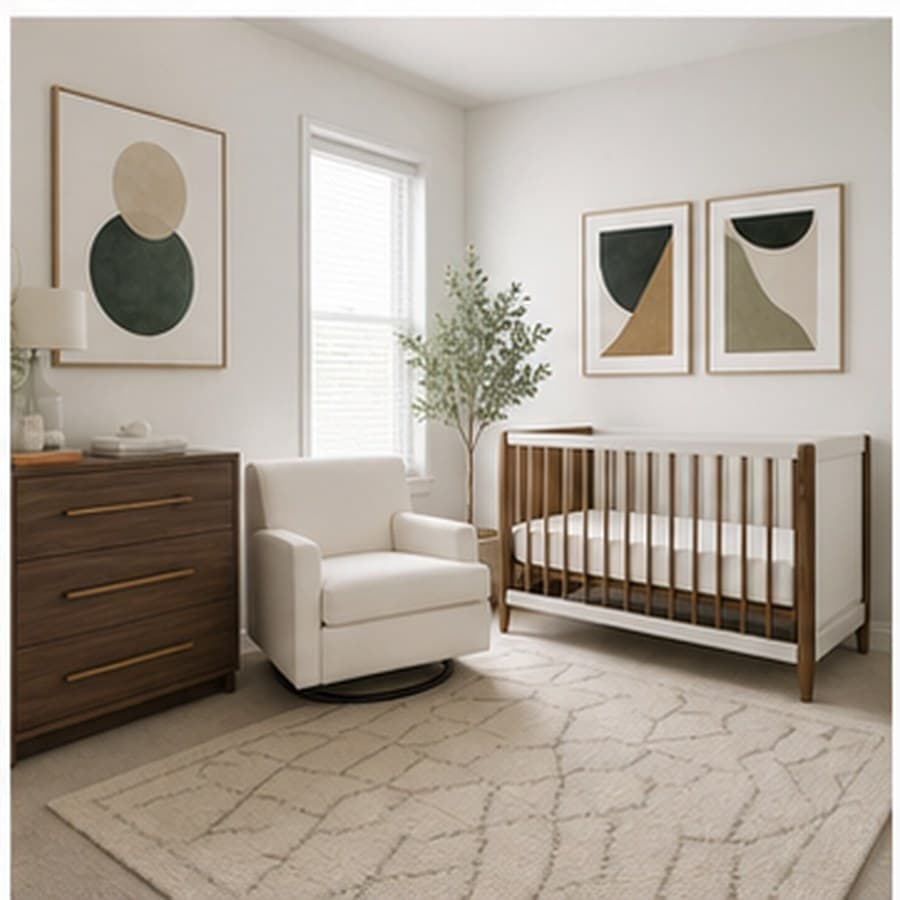 Illustrative concept
Modern Nursery
Modern nurseries should feel edited, not cold. Use clean lines, practical storage, and one warm material so the space still feels nurturing.
Example: 350 × 390 cm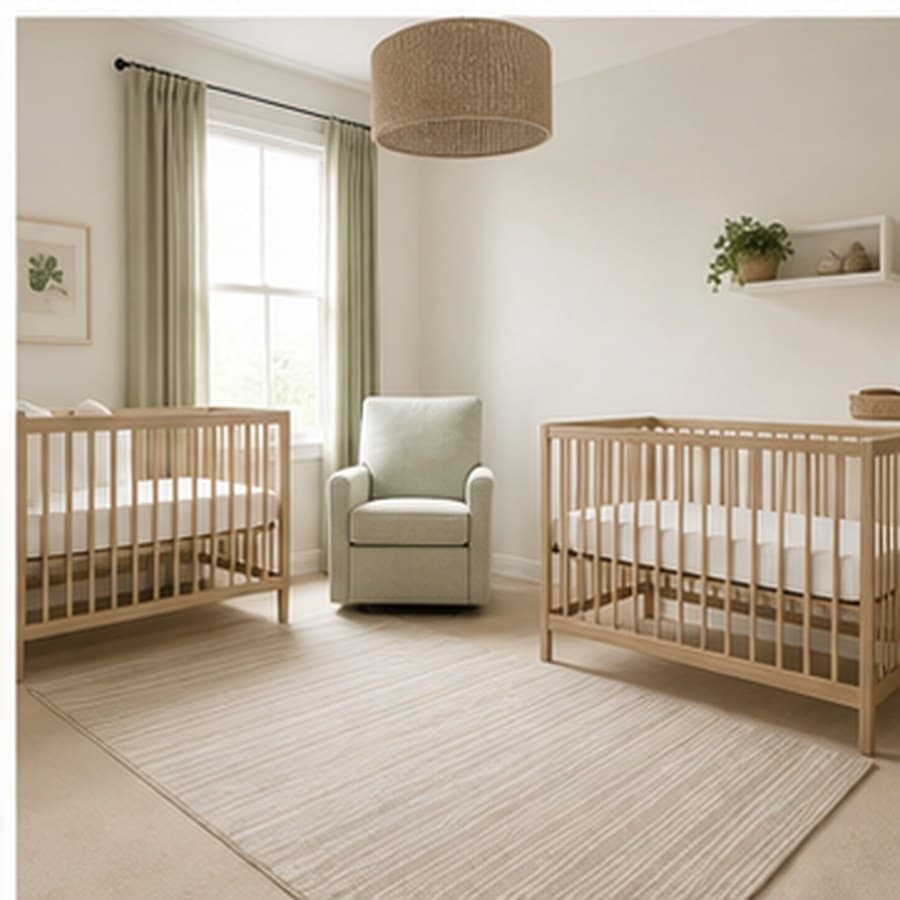 Illustrative concept
Minimalist Nursery
A minimalist nursery focuses on daily-use furniture, a documented sleep-product plan, practical lighting, storage, and open walking routes.
Example: 340 × 380 cm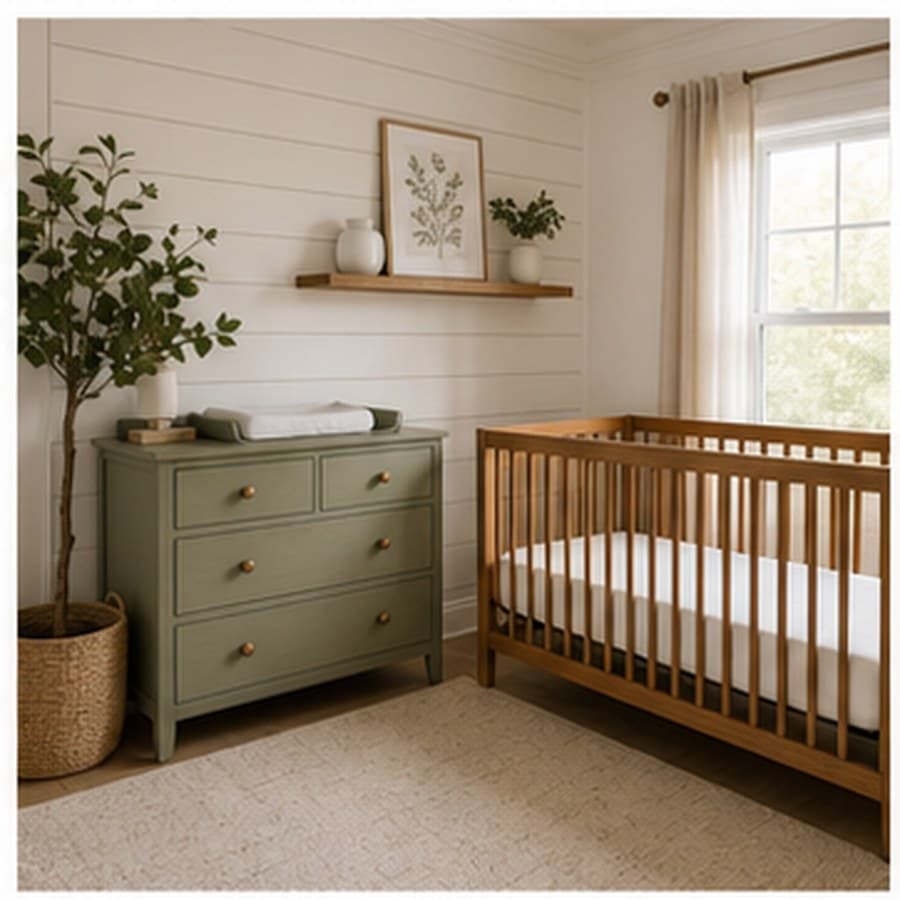 Illustrative concept
Farmhouse Nursery
Farmhouse nursery style is strongest when it uses simple painted furniture and warm wood instead of overly rustic props.
Example: 340 × 380 cm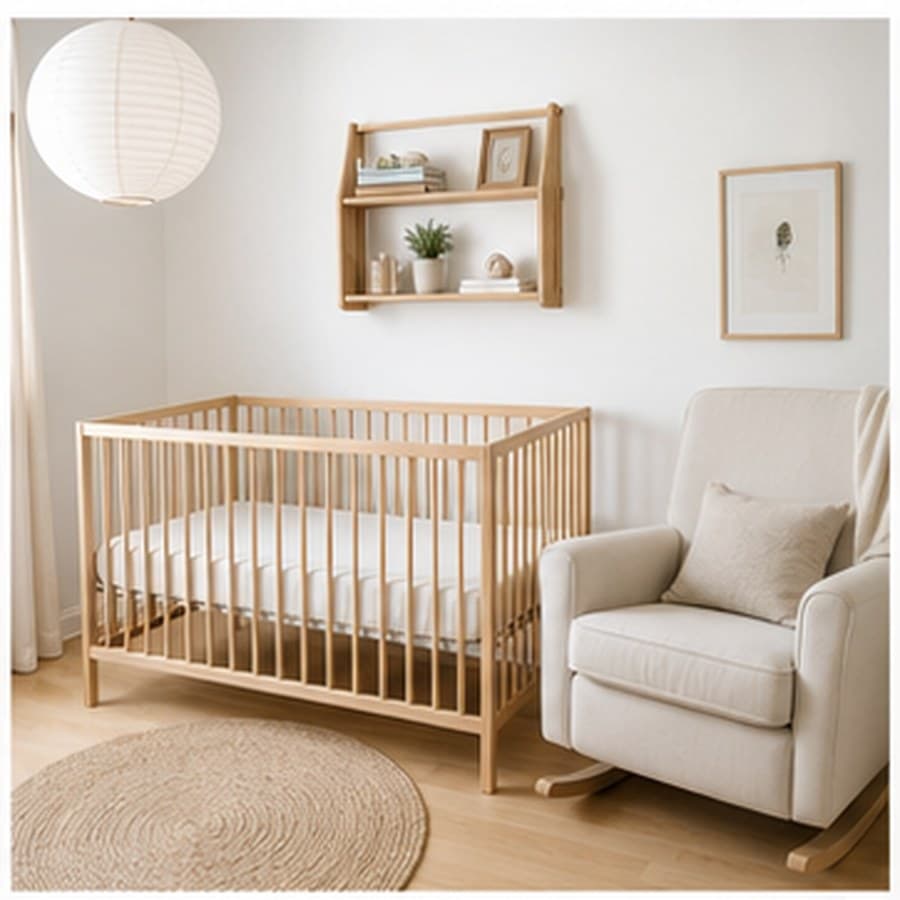 Illustrative concept
Scandinavian Nursery
Scandinavian nurseries use pale wood, soft whites, and practical storage. The look is calm, bright, and easy to maintain.
Example: 340 × 380 cm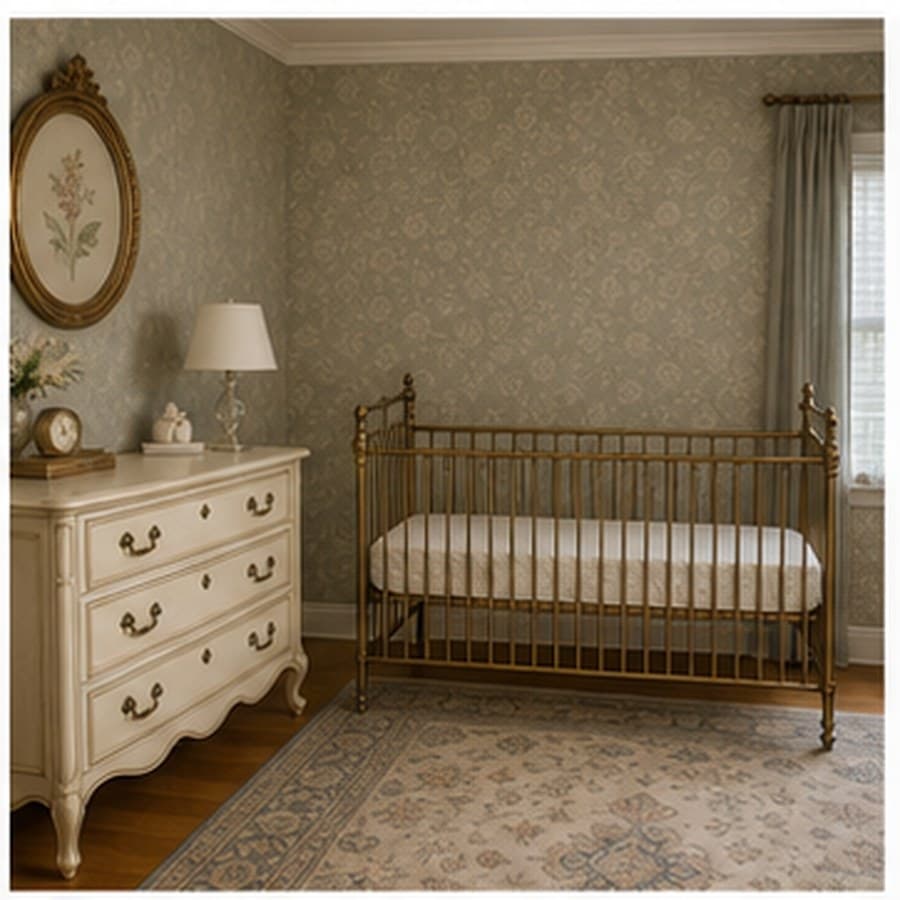 Illustrative concept
Vintage Nursery
Use vintage style as a visual direction. Verify the exact sleep product, manual, and recalls against current primary guidance.
Example: 340 × 380 cmCompare before you commit
Every concept, side by side with its example footprint.
Nursery styles compared by example footprint, palette, furniture types, and leading constraint. The smallest example here is Minimalist at 340 × 380 cm. These are the site's own illustrative examples, not measurements of your room—replace every number in the planner.
| Concept | Example footprint | Palette | Furniture types | Constraint to carry forward |
|---|---|---|---|---|
| Modern Nursery | 350 × 390 cm13.7 m² illustrative | White, Walnut, Black, Sage | Simple crib, Wide dresser, Compact chair, Low cabinet | Use exact model dimensions |
| Minimalist Nursery | 340 × 380 cm12.9 m² illustrative | Cream, Light oak, Sage, White | Crib or bassinet, Dresser, Feeding chair, Storage | Replace example dimensions with your measurements |
| Farmhouse Nursery | 340 × 380 cm12.9 m² illustrative | Warm white, Sage, Oak, Antique brass | Crib or bassinet, Dresser, Feeding chair, Storage | Replace example dimensions with your measurements |
| Scandinavian Nursery | 340 × 380 cm12.9 m² illustrative | Pale oak, White, Warm gray, Soft sage | Crib or bassinet, Dresser, Feeding chair, Storage | Replace example dimensions with your measurements |
| Vintage Nursery | 340 × 380 cm12.9 m² illustrative | Dusty green, Cream, Brass, Walnut | Crib or bassinet, Dresser, Feeding chair, Storage | Replace example dimensions with your measurements |
Footprints describe the illustrative concept renders on each guide, which are synthetic images rather than photographs of inspected rooms. They are not clearance guidance, a product recommendation, or a verdict about whether an arrangement is safe in your room.